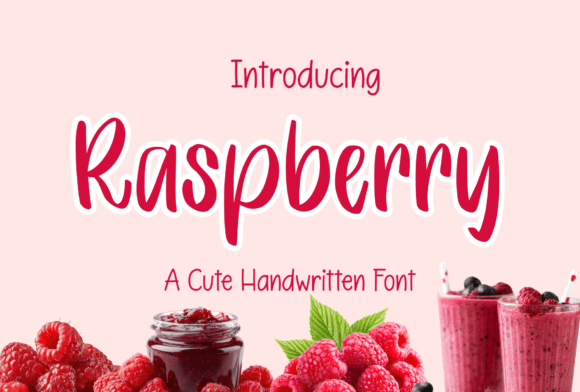
Raspberry: The Sweet Handwritten Font for Modern Design
Finding a typeface that balances personality with professionalism is a common challenge for designers and business owners alike. You want something that feels human and approachable, but it also needs to be versatile enough for a logo, a social media post, and a product label. Enter Raspberry, a premium handwritten font designed to bridge that exact gap. It’s a creative font that brings a sweet, playful energy to projects without sacrificing clarity or modern appeal.
At its core, Raspberry is a display font with a distinctively charming character. The letterforms mimic natural handwriting, featuring smooth curves, gentle loops, and a consistent baseline that keeps it looking polished. Unlike some script fonts that can feel overly formal or casual, Raspberry strikes a middle ground. It has a friendly, approachable vibe that works equally well for a bakery’s branding and a tech startup’s motivational quotes. The font’s personality is warm and inviting, making it an excellent tool for creating an immediate emotional connection with an audience.
Where Raspberry Truly Shines
The practical applications for a typeface like Raspberry are vast, spanning both digital and print mediums. Its strength lies in its ability to add a personal, handcrafted touch to any design. For brand identity, it can form the foundation of a logo for businesses that want to appear friendly, creative, or artisanal. Think of a boutique coffee roaster, a handmade jewelry line, or a cozy bookstore. The font’s visual style communicates care and authenticity, which can be a powerful differentiator in a crowded market.
In marketing and social media graphics, Raspberry excels at grabbing attention. A handwritten font stands out in a feed dominated by clean sans serifs and structured serifs. It’s perfect for Instagram quotes, Facebook ads, or Pinterest pins where you want to convey a sense of immediacy and personality. For packaging design, it can make a product feel more personal and high-end, especially for items like cosmetics, gourmet foods, or craft kits. The font’s sweet style suggests quality and a human touch, which can influence purchasing decisions at a glance.
Beyond commercial use, Raspberry is a fantastic asset for personal and editorial projects. Bloggers and content creators can use it for chapter headings in eBooks, title cards for YouTube videos, or stylized quotes. For invitations and stationery—think wedding invites, birthday cards, or thank-you notes—it provides that essential handwritten feel without requiring actual calligraphy. Its versatility as a creative font means it can adapt to a wide range of themes, from rustic to modern, depending on the color palette and supporting design elements.
Practical Guidance for Using This Typeface
Choosing the right font is only half the battle; using it effectively is what makes a design work. When evaluating Raspberry for a project, consider its role in your visual hierarchy. Because it’s a display font, it’s generally best suited for headlines, logos, and short blocks of text where its personality can shine. Using it for long paragraphs can hinder readability. Pair it with a clean, neutral sans serif font for body copy to create a balanced and professional layout. This combination ensures that your design is both engaging and easy to read.
Testing font pairings is a critical step. Raspberry’s playful curves work well with geometric sans serifs, creating a pleasing contrast between organic and structured forms. For a more cohesive, friendly look, pair it with a rounded sans serif. Always test your chosen combination at the actual size it will be used, whether on a mobile screen or a printed label, to ensure the readability holds up. Pay attention to letter spacing (tracking) and line height (leading) as well; slight adjustments can dramatically improve how the text flows and feels.
When you download Raspberry, review the included styles and character sets. Many premium fonts come with alternates, ligatures, or additional weights that can add variety and prevent repetition in your designs. Understanding what’s included allows you to fully leverage the font’s capabilities. Finally, always verify the commercial licensing terms. For entrepreneurs and small business owners, ensuring the font is licensed for commercial use is essential to avoid legal issues down the line. A properly licensed font is a key part of your professional design assets.
In the landscape of modern typography, a font like Raspberry offers a valuable solution. It provides the warmth of a handwritten font