Button: A Handwritten Script Font for Heartfelt Design
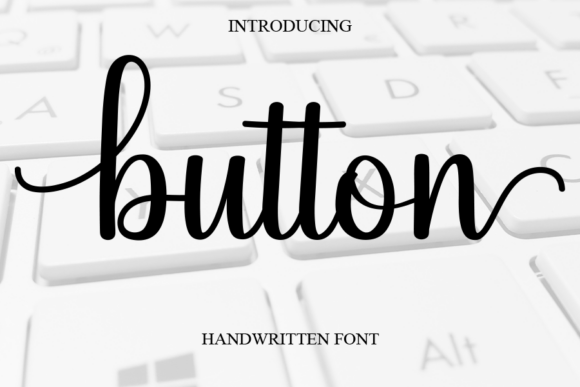
Finding a script font that feels genuinely personal, rather than overly formal or casual, can be a challenge. Button enters that space with a sweet, graceful, and beautifully balanced character. It’s a handwritten font that avoids the extremes—neither scratchy nor rigid—offering a smooth, connected flow with charming, subtle loops. This gives it a warm, personalized touch that feels both approachable and refined.
Where Button Truly Shines: Real-World Applications
The personality of a typeface like Button makes it exceptionally versatile for projects that require a human touch. Its strength lies in adding bespoke charm without sacrificing clarity.
Wedding and Event Stationery: This is a natural home for Button. Its elegant flow is perfect for save-the-dates, invitations, RSVP cards, and envelope addressing. It conveys romance and care, setting the tone for a special event.
Feminine Branding and Packaging: For businesses in beauty, wellness, artisanal foods, or boutique retail, Button can form the cornerstone of a brand identity. It works beautifully for logo design, product labels, hang tags, and thank-you notes, helping to build a brand that feels curated and customer-focused.
Editorial and Publishing: In magazines, blogs, or book covers, Button can be used for pull quotes, chapter titles, or author names to add a personal, journalistic feel. It pairs well with clean serif fonts or sans serif fonts for body text, creating a clear visual hierarchy.
Digital and Social Media: From Instagram quote graphics to website headers and email newsletter banners, Button injects personality into digital content. Its readability at various sizes makes it a practical creative font for social media graphics and web design accents.
Product and Packaging Design: Think artisanal candle labels, boutique bakery packaging, or handmade soap wrappers. Button adds that handcrafted, premium feel that can make a product stand out on the shelf and communicate quality.
Making Button Work for Your Project: Practical Guidance
Choosing the right font is about more than just liking how it looks. It’s about fit, function, and consistency. Here’s how to evaluate and use Button effectively.
Evaluate the Project Fit: Before selecting Button, consider your audience and message. Is the goal to feel friendly, elegant, nostalgic, or playful? Button’s personality leans toward warmth and grace. It’s ideal for projects where you want to create an emotional connection. For a corporate report or a tech startup’s primary brand font, a more neutral typeface might be better, with Button reserved for accents.
Master the Font Pairing: Button, as a display font, should rarely be used for long paragraphs. Its power is in headlines, logos, and highlights. Pair it with a highly readable serif font like Garamond for a classic look, or a geometric sans serif font like Montserrat for a modern contrast. This pairing creates balance and ensures your body copy remains easy to read.
Leverage the Included Styles: A quality premium font like Button often comes with more than just basic letters. Check for stylistic alternates, swashes, and ligatures. These features allow you to customize the look of specific words or initials, making your design even more unique. Always review the font specimen sheet to see what’s available.
Prioritize Readability: While Button is legible for its category, context matters. Use it for short bursts of text. Avoid setting it in very small sizes or in long, dense blocks. Test it at the intended size and on the intended medium—what looks great on a poster might be harder to read on a mobile screen.
Understand the Licensing: If you’re using Button for commercial work—as a freelancer, agency, or business—ensure you have the correct commercial font license. The mention of PUA encoding is significant; it means all the special characters and decorative glyphs are easily accessible through standard character maps, which is a huge practical benefit for designers.
Ultimately, a script font like Button is a powerful tool in your design assets toolkit. It’s not for every job, but for the right project, it can elevate the work from generic to genuinely engaging. It helps build a brand identity that feels human, tells a story, and connects on a personal level. When used thoughtfully, respecting its strengths and pairing it wisely, Button becomes more than just letters—it becomes a voice.