Unleashing Thrip: A Bold Display Font for Impactful Design
When you're building a brand or crafting a visual project, the typeface you choose does more than just display words; it sets a tone, creates an emotion, and communicates a core message before a single sentence is fully read. Finding a premium font that carries this weight can be a challenge. You need something with distinct personality, but it also has to be versatile and professional. This is where Thrip enters the conversation—a display font engineered to be the visual anchor of your layouts.
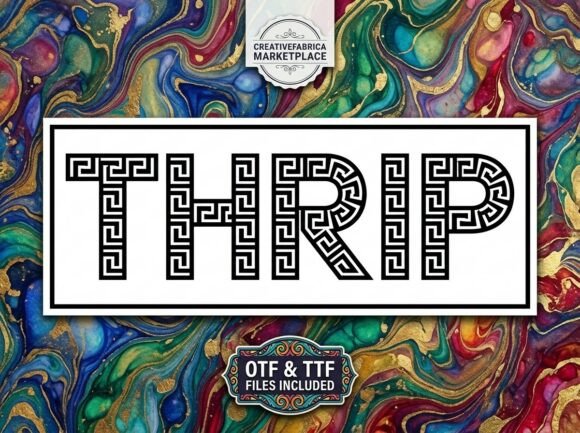
Thrip isn't designed to fade into the background of a paragraph. It’s built to command attention. As an all-caps typeface, its character is immediately apparent. The letterforms possess a strong, artistic quality, balancing creative flair with a clean, structured foundation. Think of it as a tool for creators who want to break away from the ordinary. It has the confidence of a serif font in its presence but often carries the modern edge of a sans serif font, making it a fascinating hybrid for modern typography. Its personality is bold and assertive, yet it avoids feeling aggressive or overbearing. This balance makes it a powerful asset for any designer, marketer, or small business owner looking to inject a high-end aesthetic into their work.
Where Thrip Shines: Practical Applications for Every Creator
The true value of any creative font lies in its application. Thrip excels in scenarios where you need to make a definitive statement. It’s a natural fit for logo design, where the goal is to create a memorable and recognizable mark. A logo set in Thrip will have an inherent strength and clarity, helping a new business establish a confident brand identity from day one.
Beyond logos, its utility extends across a wide range of projects. Consider these real-world uses:
- Editorial Design & Publishing: Use Thrip for chapter titles, pull quotes, or magazine covers. It draws the reader's eye and establishes a strong visual hierarchy on the page, making layouts feel dynamic and professional.
- Packaging Design: On a shelf crowded with products, Thrip can make your packaging pop. Its bold character ensures your product name is legible from a distance, influencing consumer perception and shelf appeal.
- Web Design & Digital Media: For website headers, hero sections, and key call-to-action buttons, Thrip provides instant impact. It’s also perfect for creating scroll-stopping social media graphics, from Instagram quote posts to YouTube thumbnails.
- Branding & Marketing Materials: From business cards and letterheads to posters and advertisements, Thrip helps maintain a consistent and high-end feel. It’s a commercial font that can unify all your marketing collateral.
It’s less suited for long-form body text, but that’s by design. Its role is to be the centerpiece, the element that anchors your design and gives it character. For body copy, you would pair it with a more neutral, readable font—be it a script font, a handwritten font, or a classic sans serif—to create a balanced and effective visual hierarchy.
Working with Thrip: A Designer's Practical Guide
Integrating a new font into your workflow should be a thoughtful process. Before committing, consider the project's specific needs. Does the brand's personality align with Thrip's bold, artistic character? If the goal is to convey softness or minimalism, it might not be the right fit. But for projects that demand confidence, creativity, and a touch of modern sophistication, it’s an excellent choice.
A crucial step is testing font pairing. Because Thrip is an all-caps display face, it needs a counterpart for longer text. Try pairing it with a clean, geometric sans serif for a modern, tech-forward feel. Alternatively, combining it with a classic serif can create a beautiful contrast between contemporary boldness and traditional elegance. The key is to let Thrip dominate the headlines while its partner font handles the supporting information.
The package you receive is designed for professional versatility. Here’s a quick breakdown:
- OTF File: This is your go-to for most professional design assets work. The OpenType format supports advanced typographic features, giving you more control in software like Adobe Illustrator, InDesign, and Photoshop.
- TTF File: The TrueType font file ensures maximum compatibility across all operating systems, including Windows and macOS. This is particularly useful if you need to embed the font in certain documents or use it in environments where OTF support might be limited.
Technical Note: Remember, Thrip is an all-caps display typeface by design. It does not contain lowercase letters. This is a deliberate stylistic choice, making it a powerful tool for logos, titles, and decorative initials where a strong, uniform presence is required. Embrace this characteristic rather than seeing it as a limitation—it’s what gives the font its unique strength.
Ultimately, choosing a font like Thrip is an investment in your project's visual language. It’s a design asset that helps you communicate with clarity and style, ensuring your work not only gets noticed but is remembered. By understanding its personality and applying it thoughtfully, you can elevate your creative projects from ordinary to extraordinary.