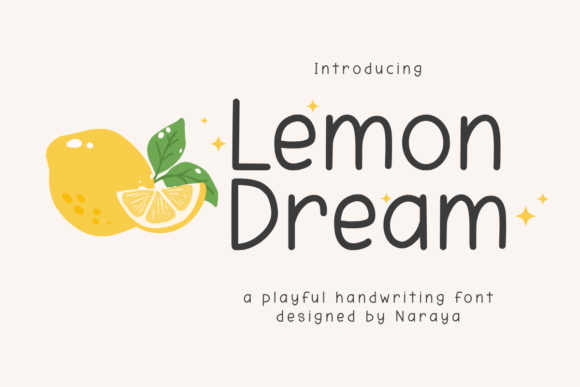
Lemon Dream: A Font That Feels Like a Sunny Day
There’s a particular kind of design asset that doesn’t just sit on the page—it communicates a feeling. Lemon Dream is one of those. At its core, it’s a premium handwritten font, but describing it that way misses the point. It’s a typeface built for projects that need to feel personal, approachable, and genuinely joyful. The clean, bouncy lines and consistent monolinear weight give it a modern yet timeless charm, steering clear of the messy, overly casual look that can undermine a professional project.
Imagine the friendly scrawl of a note from a close friend, but refined for commercial use. That’s the balance Lemon Dream strikes. Its smooth paths and deliberate letterforms are designed with real-world application in mind, especially for those who use cutting machines like Cricut or Silhouette. You won’t spend hours weeding out problematic, thin swashes. The legibility is surprisingly strong for a script font, making it versatile enough for more than just a headline.
Where This Handwritten Font Truly Shines
The best creative fonts have a natural habitat. For Lemon Dream, that’s anywhere a human touch is needed to build connection. This isn’t the font for a stern legal document or a minimalist tech startup’s annual report. Its personality is warm, whimsical, and authentic, which makes it a powerhouse for specific types of work.
For small business owners and crafters, it’s a natural fit. Think about the branding for a custom acrylic keychain shop, a vinyl sticker business, or a nursery decor line. Lemon Dream injects that handmade authenticity directly into your logo design and product packaging. It tells your customers there’s a real person behind the product, someone who cares about the details. On social media graphics, it stops the scroll. A quote or call-to-action set in this font feels less like an ad and more like a recommendation from a friend.
In the world of publishing and content creation, its applications are just as strong. For KDP interior designers, it can add a playful, inviting header to a planner layout, a gratitude journal, or a recipe book. Bloggers and content creators can use it to create standout featured images, newsletter headers, or Pinterest pins that have a distinct, recognizable style. It’s a fantastic tool for building a cohesive brand identity across platforms without relying on generic templates.
Making Smart Choices with a Display Font
Choosing a font like Lemon Dream is a strategic decision. It’s a display font, meaning it’s designed to attract attention at larger sizes. Its strength lies in headlines, logos, and short bursts of text. You wouldn’t set an entire blog post or a book chapter in it; that’s the job of a highly legible sans serif font or a classic serif font. The real magic happens in the pairing.
A great font pairing creates contrast and hierarchy. Try combining Lemon Dream with a clean, geometric sans serif like Montserrat or Poppins. The handwritten, organic feel of the script against the structured, neutral backdrop of the sans serif creates a beautiful visual tension that guides the reader’s eye. This pairing works exceptionally well for web design hero sections, packaging design, and editorial design layouts. The script draws you in for the main message, while the supporting font delivers the detailed information with clarity.
Before you commit, always test. Type out the specific words you’ll use in your project. Check the legibility of the letters that often vary in script fonts, like a lowercase ‘g’ or ‘s’. See how it looks at the size you intend to use. If you’re creating a logo, ensure it remains recognizable when scaled down to a favicon or social media profile picture. The goal of modern typography is to solve a communication problem, and testing ensures this creative font is the right solution for yours.
Practical Considerations for Your Project
When you’re ready to use Lemon Dream, look at the full package. A well-crafted commercial font often includes more than just the basic alphabet. Check for stylistic alternates, ligatures, and multilingual support. These extras can give you more flexibility to customize the look and make your text feel even more unique. Understanding what’s included helps you leverage the font to its full potential.
Licensing is a critical, practical step. For any project that will be used to generate income—whether you’re selling a physical product, a digital download, or a service—you need to ensure you have the correct commercial license. This isn’t just about legality; it’s about respecting the work of the type designer who created this valuable design asset. A proper license protects your business and supports the creative ecosystem.
Ultimately, Lemon Dream is more than just a collection of glyphs. It’s a tool for storytelling. It’s for the entrepreneur who wants their brand to feel welcoming, the designer aiming to create a memorable visual hook, and the crafter whose work is defined by its personal touch. Used thoughtfully, it can elevate a project from looking professional to feeling genuinely human.