Inject Raw, Cinematic Defiance into Your Designs
There’s a certain type of project that demands more than just a standard display font. You know the ones: the dark fantasy game title that needs to feel ancient and aggressive, the action movie poster that has to scream with intensity, or the alternative metal album cover that requires a raw, gritty edge. For these projects, you need a typeface with a genuine personality—one that doesn’t just sit on the page but attacks it. This is where Legend enters the scene, not as a gentle tool, but as a powerful design asset built for impact.
What Makes Legend a Standout Creative Font?
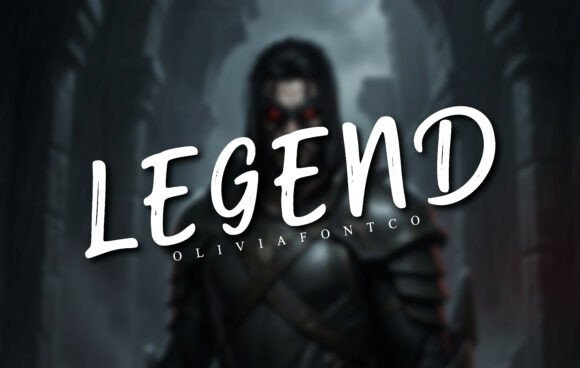
Legend is a hand-drawn brush font, but that simple description hardly does it justice. Its character is aggressive and unapologetic. Each letterform is crafted with a sense of movement and raw energy, mimicking the imperfect, textured strokes of a heavy brush or marker. This gives it an organic, human quality that feels authentic and intense. The true technical genius, however, lies in its crisp outer drop contour. This isn't just a standard shadow; it's a sharp, defining outline that cuts through visual noise. Place Legend over a full-bleed, smoky, or illustratively complex backdrop, and it remains absolutely legible. The contour creates a clean separation between the text and the background, ensuring your message is never lost. It’s this combination of raw, hand-drawn style and crisp technical execution that makes Legend an extraordinary focal asset for any brand identity or project needing a heroic, defiant statement.
Where Does This Typeface Truly Shine?
Understanding a font's personality is one thing; knowing where to apply it is where practical design begins. Legend isn't for your corporate annual report or a serene wedding invitation. Its strengths are specific and powerful. Consider these applications where Legend can elevate your work:
- Dark Fantasy & Action Gaming: This is Legend's natural habitat. Think title screens, in-game UI for health bars or objective markers, and promotional key art. It communicates power, danger, and epic scale, perfect for logo design for a gaming studio or clan.
- Cinematic & Entertainment Branding: Movie posters, especially for action, thriller, or horror genres, benefit from its intensity. It can also bring a gritty edge to TV series graphics or streaming service banners for specific shows.
- Music Industry Applications: Album covers for metal, hardcore, and alternative bands are a perfect match. It also works well for concert posters, band merchandise, and even social media graphics for artists with an aggressive aesthetic.
- E-Sports & Tactical Brands: The font’s sharp, aggressive lines resonate with the competitive energy of e-sports. Use it for team names, overlay graphics, and merchandise. It also suits tactical gear, athletic branding for extreme sports, and performance apparel.
- Gritty Streetwear & Apparel: For clothing brands targeting a counter-culture or urban edge, Legend provides a distinct typographic voice. It’s ideal for bold chest prints, sleeve graphics, and hang tags that need to stand out.
Practical Guidance for Using a Font Like Legend
Choosing a premium font like Legend is an investment. To get the most out of it, you need to think like a strategist. First, always evaluate project fit. Is the tone of your project aggressive, heroic, or defiant? If the answer is yes, Legend is a contender. If the tone is gentle, luxurious, or formal, you should look elsewhere—perhaps to a refined serif font or a clean sans serif font.
Next, master the art of the font pairing. Legend is a powerhouse, so it rarely needs another strong personality beside it. It pairs best with simple, neutral companions. A clean sans serif for body copy or a straightforward serif for subheadings will provide visual hierarchy without creating conflict. Let Legend own the headlines and major focal points.
Always test for readability in context. While the outer contour is designed for legibility, you must still check it against your specific background. View it at the intended size and on the actual device or print medium. Does it hold up? Finally, understand your licensing. If you're using Legend for a commercial product—be it a client's logo, a sold-out t-shirt line, or a paid game—you must have the appropriate commercial license. This protects you legally and ensures the font creator is supported for their work.
Legend is more than just a collection of glyphs; it’s a statement piece. When used with intention and an understanding of its powerful personality, it can transform a standard design into a memorable, impactful piece of modern typography that truly connects with an audience seeking that raw, cinematic edge.